
PA 1 DATE SHEET:-
ASSESSMENTS AND EVALUATION POLICY
EVALUATION POLICY
CLASSES UPTO FOUNDATIONAL STAGE:
Pre-Primary (Nursery to KG) – Symbol-Based Competency Assessment
Method: Instead of traditional marks, learners are assessed using developmentally appropriate visual symbols that reflect their proficiency in core developmental areas.
Domains Assessed:
- Language & Communication
- Cognitive & Numeracy Skills
- Motor Skills (Fine & Gross)
- Social-Emotional Development
- Environmental Awareness & Creative Expression
Symbols:
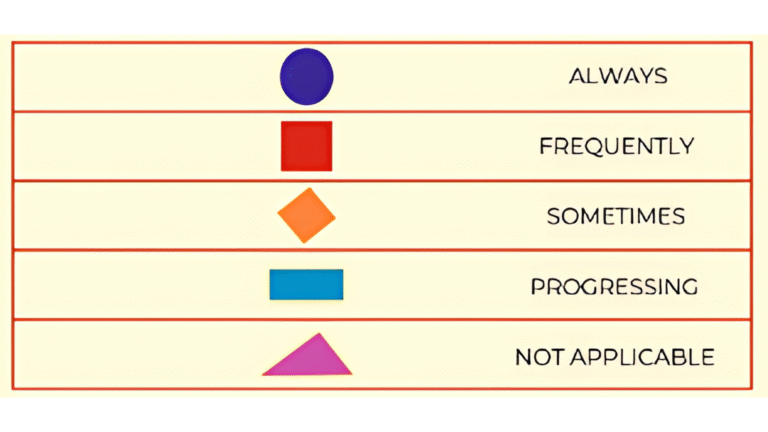
Reporting: Each child receives a colorful Learning Portfolio with symbol-coded progress maps, anecdotal teacher notes, and parent-guided activities for home support.
Grades 1 & 2 – Hybrid Assessment Model with Marks & Competency Bands
Structure: 4 periodic assessments (40 marks each), aligned with HPC but innovatively reported.
Each subject includes a “Learning Reflection” section with student self-assessment and teacher feedback.
- Inclusion of mini-projects, peer learning reflections, and creativity journals for a well-rounded view of the child’s growth.
Grades 3–10: Dynamic Assessment & Promotion Model
Structure:
- Term 1:
- 🧪 PA1 (Periodic Assessment 1) – 20%
- 📘 Term 1 Examination – 30%
- Term 2:
- 🧪 PA2 (Periodic Assessment 2) – 20%
- 📘 Term 2 Examination – 30%
➡️ Total Weightage: 100%
➡️ Promotion based on cumulative performance across academics, projects, and skill development
🌟 Innovative Enhancements
1. Competency-Linked Assessment
- Each exam question and project is mapped to specific learning outcomes.
- Students receive a Competency Profile alongside marks, highlighting mastery in:
- Critical Thinking
- Conceptual Understanding
- Communication
- Collaboration
- Creativity
2. Subject Enrichment Activity(SEA)
- Each term includes 1 interdisciplinary SEA Module.
- Evaluated on rubrics covering innovation, research, presentation, and teamwork.
- Projects are showcased during Learning Festivals or as part of portfolios.
3. Holistic Report Cards
- Alongside subject marks, include:
- Life skills & value education feedback
- Art & robotics participation
- Emotional and social development indicators
- Personalized remarks from teachers
4. Promotion Criteria Reimagined
- Based not only on academic score but also on:
- Skill Growth
- Active Participation
- Attendance & Attitude
- Project Performance
- Support Plans offered to students not meeting benchmarks — with bridge programs, mentoring, and parent collaboration.
End Result:
A robust, child-centric system that ensures academic accountability while nurturing creativity, confidence, and core 21st-century skills — making students not just exam-ready, but life-ready.